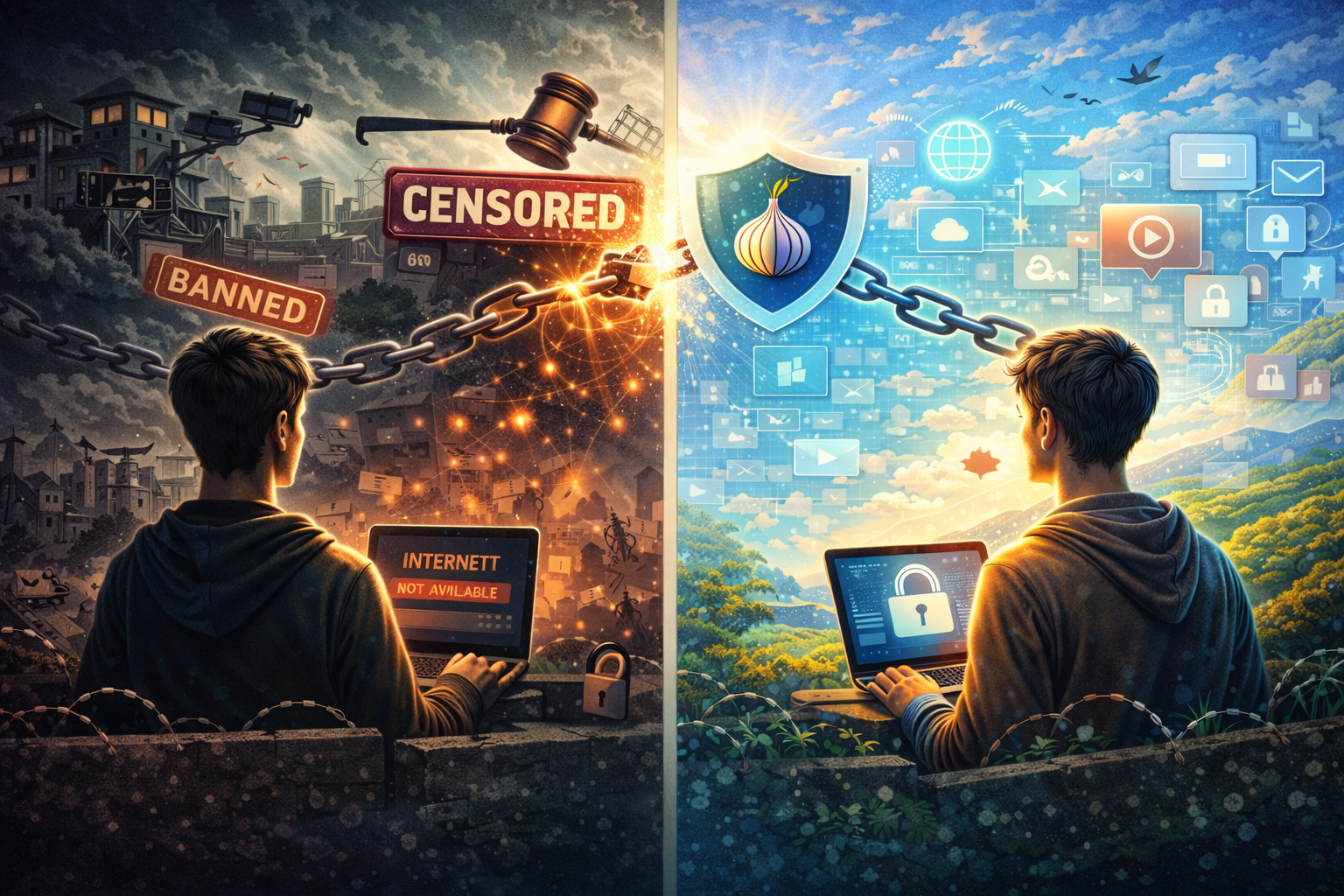
Internet censorship is a global reality. Governments, institutions, and network operators restrict access to information every day — blocking news sites, silencing political opposition, and limiting what people can read, watch, and say online. Censorship circumvention refers to the strategies and tools used to evade or overcome these restrictions.
But circumvention is about more than just accessing blocked content. At its core, it's about preserving the fundamental right to seek, receive, and share information and ideas without interference.
Understanding Censorship and Why It Happens
Internet censorship takes many forms: blocked websites, filtered keywords, throttled connections, and outright shutdowns. The motivations vary — governments may cite national security, public morality, or political stability. But the effect is the same: someone else decides what information you're allowed to access.
Circumvention tools exist because the free flow of information is a fundamental human right. When that right is denied by technical means, it can be restored by technical means.
The Importance of Internet Freedom
Access to an open internet affects nearly every aspect of modern life:
- Journalists depend on it to report freely without surveillance or interference
- Activists use it to organize and communicate without fear of retaliation
- Researchers need access to the global body of knowledge, not a filtered subset
- Ordinary citizens deserve the ability to engage in open discourse
Circumvention tools restore the autonomy that censorship strips away. They let people participate in the global conversation on equal footing.
Benefits Beyond Access
The benefits of circumvention extend well beyond simply visiting a blocked website:
- Privacy protection: Circumvention tools typically encrypt traffic, shielding users from surveillance even when they're not accessing blocked content
- Innovation: Open access to global platforms and tools allows researchers and developers to build on a wider foundation of knowledge
- Cross-cultural understanding: People in different countries can share perspectives, fostering empathy and global connectivity
- Economic opportunity: Unrestricted access to global markets and platforms enables participation in the digital economy
Available Tools
Several tools have been developed specifically for circumvention:
- VPNs (Virtual Private Networks): Encrypt your connection and route it through servers in other countries, bypassing geographic restrictions
- Proxy servers: Act as intermediaries between your device and blocked content
- Tor Browser: Routes traffic through a layered network of volunteer-operated nodes, providing strong anonymity alongside access
- I2P: A decentralized peer-to-peer network designed for censorship resistance, with no central infrastructure to block
- DNS tunneling: Encodes data within DNS queries to bypass firewall restrictions
- Mirror sites: Duplicate copies of blocked websites hosted at different addresses
Impact on Freedom of Expression
Circumvention technology directly empowers those who most need it. Journalists in restrictive environments can report without fear that their communications will be intercepted. Activists can organize without surveillance. Marginalized communities can advocate for change and connect with allies globally.
Beyond individual empowerment, circumvention contributes to a healthier global information ecosystem. When diverse perspectives can participate in online discourse, the result is richer, more accurate, and more representative than what filtered internet access allows.
Internet freedom isn't a luxury. It's infrastructure for a just society — and circumvention tools are part of what keeps that infrastructure open.